Basal Cell and Cutaneous Squamous Cell Carcinomas: Diagnosis and Treatment
Basal Cell and Cutaneous Squamous Cell Carcinomas: Diagnosis and Treatment
Millions of Americans receive a basal cell carcinoma or cutaneous squamous cell carcinoma diagnosis every year. These two common forms of skin cancer develop when skin cells grow abnormally. Understanding their warning signs can save your life, as both conditions are usually treatable when caught early. Swinyer Woseth Dermatology can help. Our teams in Salt Lake City and South Jordan, UT, use proven methods to identify skin cancer signs and create personalized treatment plans. We use the latest diagnostic tools to examine suspicious growths, and our providers stay current with treatment advances to offer the best care possible. Keep reading as we outline these skin cancers, their symptoms, and available treatments.
What Is Basal Cell Carcinoma?
Basal cell carcinoma starts in the skin’s basal cells, which sit at the bottom of the outermost layer of skin. When they grow out of control, they form tumors. This type of skin cancer grows slowly and rarely spreads, but it can damage nearby tissue if left untreated. It most commonly appears in areas that get a lot of sun exposure.
Several factors increase your risk of developing basal cell carcinoma. People with fair skin face a higher risk, as do those who spend lots of time in the sun without protection. A history of severe sunburns, especially during childhood, also raises your chances of developing this cancer.
Understanding Cutaneous Squamous Cell Carcinoma
Cutaneous squamous cell carcinoma begins in squamous cells. These flat cells make up most of the outer layer of your skin. Like basal cell carcinoma, this cancer develops on sun-exposed areas. However, squamous cell carcinoma can be more aggressive than its counterpart. While it also grows relatively slowly, it has a higher chance of spreading to other body parts. As a result, early detection is even more critical.
This cancer often appears as a firm, red bump or a flat lesion with a scaly surface. Some people notice sores that heal and then reopen repeatedly.
Risk Factors for Basal Cell and Cutaneous Squamous Cell Carcinoma
Understanding your risk factors helps you take steps to protect your skin health. Ultraviolet radiation from the sun is the primary cause of both types of skin cancer. Tanning beds also expose you to harmful UV rays. Among other risk factors are:
- People with light-colored skin, blonde or red hair, and light eyes face a higher risk. However, anyone can develop skin cancer, regardless of skin tone.
- Most cases occur in people over the age of 50, but younger people can also develop these cancers, especially if they have significant sun exposure.
- A weakened immune system increases risk. This includes people taking immunosuppressant medications or those with certain medical conditions. Previous radiation treatment can also raise your chances of developing skin cancer.
- If close relatives had skin cancer, you may be more likely to develop it. Having had skin cancer before also increases your risk of getting it again.
Skin Conditions Related to Carcinomas
Certain skin conditions can increase your risk of developing cutaneous squamous cell carcinoma. Actinic keratosis, also called solar keratosis, creates rough, scaly patches on sun-damaged skin. These precancerous growths can turn into squamous cell carcinoma if not treated.
Chronic wounds or scars can also develop into skin cancer. Burns, especially severe ones, create areas where cancer may form years later. Old scars from injuries or surgery should be monitored.
Bowen’s disease is another condition linked to squamous cell carcinoma. This early form of skin cancer appears as a red, scaly patch. Without treatment, it can progress to invasive cancer.
Recognizing Skin Cancer Signs and Symptoms
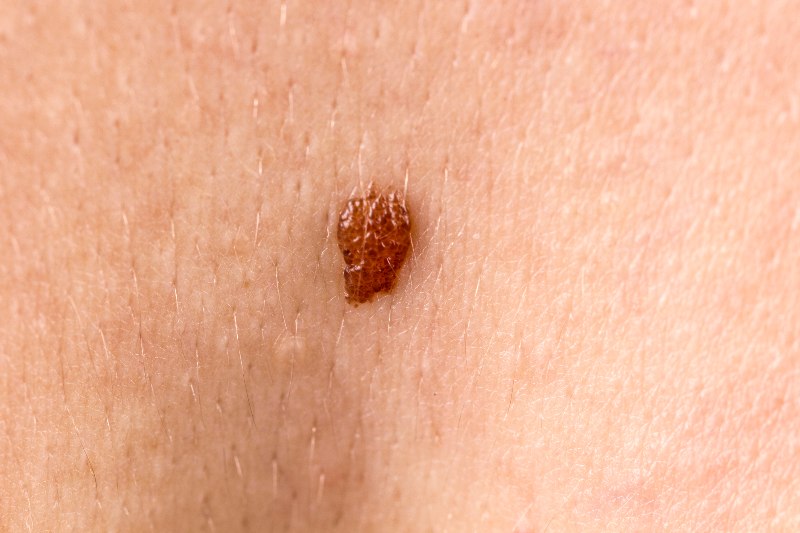
Knowing what to look for helps you spot potential cancer warning signs early. Basal cell carcinoma often looks like a pearly or waxy bump. It may have visible blood vessels on its surface. Some basal cell carcinomas appear as flat flesh-colored or brown lesions. The cancer might bleed easily and form a scab that doesn’t heal properly.
Cutaneous squamous cell carcinoma typically appears as a firm, red bump. The growth may have a rough, scaly surface. Sometimes, it looks like a flat lesion with a crusty texture.
Watch for any new growth on your skin. Pay attention to changes in existing moles or spots and look for sores that don’t heal within a few weeks. Check your entire body regularly and use a mirror to examine hard-to-see areas. You may even ask someone to check your scalp and back.
We Can Diagnose Your Carcinoma
When you notice suspicious skin changes, schedule an appointment with Swinyer Woseth Dermatology right away. We’ll examine the area closely using a special magnifying tool called a dermatoscope to see details invisible to the naked eye.
If we suspect cancer, we’ll perform a biopsy. This involves removing a small sample of the suspicious tissue. We then send this sample to a laboratory for analysis. Results usually come back within a week or two. The lab report will tell us whether cancer is present while also providing information about its type and stage. This helps us create the most effective treatment plan.
Treatment Options for Basal Cell and Cutaneous Squamous Cell Carcinoma
We offer several skin health treatments. The size, location, and type of skin cancer will influence your personalized plan. Options include:
- Surgical excision involves cutting out the cancer and some healthy tissue around it. This ensures we remove all cancer cells. We then close the area with stitches.
- Mohs surgery is a specialized technique for certain cases, where a surgeon removes thin layers of tissue one at a time. Each layer is examined under a microscope immediately. This continues until no cancer cells remain, saving as much healthy tissue as possible.
- Curettage and electrodessication treat smaller cancers. Your dermatologist can scrape away and use an electric needle to destroy cancer cells.
- Cryotherapy freezes cancer cells with liquid nitrogen. This treatment works for some early-stage cancers. The treated area will form a blister and eventually fall off.
- Topical medications can treat very early or superficial skin cancers. These creams or gels are applied directly to the skin over several weeks.
- Radiation therapy may be an option when surgery isn’t possible. It uses high-energy beams to destroy cancer cells.
How to Protect Your Skin From Recurrence
After treatment, taking steps to protect your skin becomes essential. We advise our skin cancer patients to:
- Apply sunscreen with SPF 30 or higher daily, reapplying every two hours when outdoors.
- Wear long sleeves, pants, and wide-brimmed hats to shield your skin from UV rays.
- Seek shade during peak sun hours.
- Avoid tanning beds altogether.
- Perform monthly self-examinations to look for new growths or changes to existing spots.
- Schedule regular follow-up appointments with our dermatologists.
Contact Our Skin Health Experts in Utah
Early detection of basal cell carcinoma and cutaneous squamous cell carcinoma significantly improves treatment outcomes. If you notice any concerning changes to your skin, contact us to schedule a consultation in Salt Lake City or South Jordan, UT.