
Can Tattoos Be Fully Removed? Laser Tattoo Removal Process, Sessions, Risks & Results
Can Tattoos Be Fully Removed?
For many, a tattoo is a permanent expression of identity, but as our lives and tastes evolve, we may find that a piece of ink no longer resonates with who we are today. Whether it is due to professional requirements, a change in personal aesthetic, or simply “tattoo regret,” the question of whether a tattoo can be fully erased is a common one. While the journey toward clear skin requires patience and commitment, modern advancements in laser technology have made it safer and more effective than ever to significantly fade or completely remove unwanted ink. Swinyer Woseth Dermatology walks you through the clinical process of tattoo removal, the emotional journey, and the realistic outcomes you can expect when choosing to start fresh.
Can Tattoos Be Fully Removed?
The short answer is yes, in many cases, tattoos can be removed to the point where they are no longer visible to the naked eye. Total removal depends on a variety of factors, including the age of the tattoo, the type of ink used, and the depth at which the pigment was placed. While some patients achieve a completely clear result, others may experience slight lingering shadows or pigment changes. It’s important to approach the process with realistic expectations, understanding that your skin’s unique healing ability plays a vital role in the outcome.
What Is Laser Tattoo Removal?
Laser tattoo removal is a non-invasive medical procedure that uses high-intensity light beams to break down tattoo pigment beneath the surface of the skin. Unlike older methods like dermabrasion or acid peels, which can be traumatic to the epidermis, modern lasers are designed to target the ink specifically without damaging the surrounding tissue. It’s currently recognized by dermatologists as the gold standard for removing ink safely and effectively.
How Laser Tattoo Removal Works
The science behind the laser tattoo removal process relies on a principle called photothermolysis. The laser emits ultra-short pulses of light energy that are absorbed by the tattoo ink. When the ink particles absorb this energy, they shatter into tiny, microscopic fragments. Once broken down, your body’s immune system takes over. White blood cells gradually carry these fragments away through the lymphatic system, where they are eventually processed and eliminated from the body.
Tattoo Removal Process: Step-by-Step
We’ll meet with you to help you understand what to expect during the tattoo removal process. After we assess your skin type and tattoo, you can expect the following:
- Preparation – We clean the area and may apply a topical numbing cream or cooling device to ensure your comfort during the session.
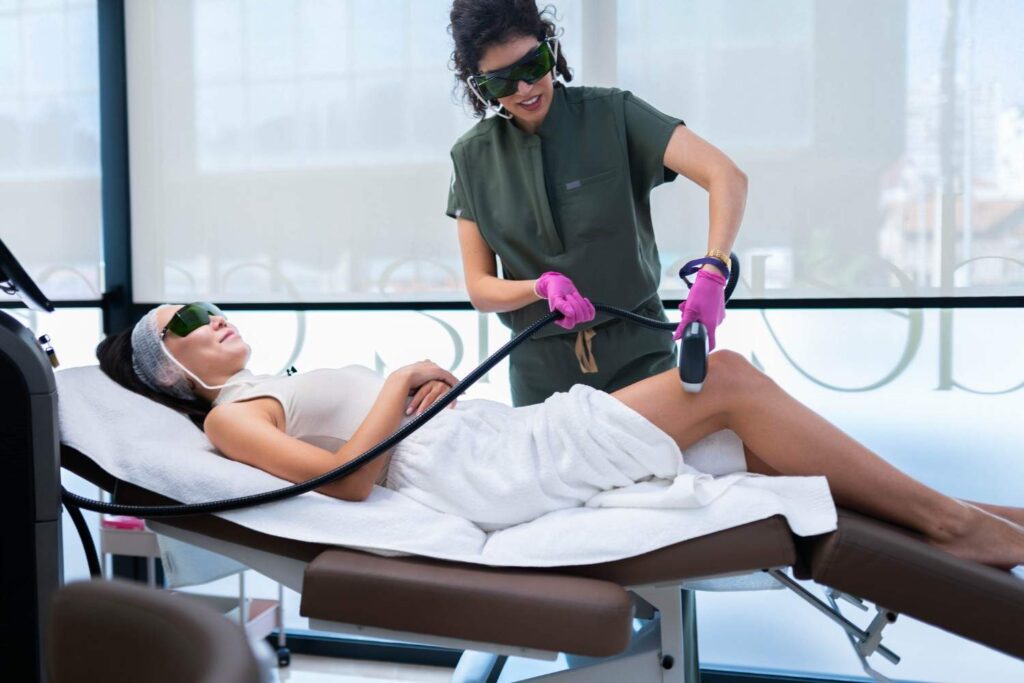
- Laser Application – The technician passes the laser handpiece over the tattoo. You may hear a snapping sound and see a temporary “frosting” effect on the skin as the ink reacts.
- Aftercare – We apply a soothing ointment and bandage. You will receive specific instructions on how to keep the area clean and protected from the sun to facilitate healing.
Number of Sessions Required
On average, most tattoos require between six to 12 sessions for complete removal. This number varies significantly based on the Kirby-Desai Scale, which considers:
- Ink Color – Black and red are typically easier to remove, while vibrant greens, blues, and yellows are often the hardest to remove.
- Ink Density – Professional tattoos usually have more ink and deeper penetration than amateur “stick-and-poke” tattoos.
- Location – Tattoos closer to the heart tend to fade faster than those on the hands or feet.
Tattoo Removal Risks and Side Effects
While laser technology is highly advanced, it’s essential to be aware of the potential risks associated with tattoo removal. The most common side effects include temporary redness, swelling, blistering, and scabbing. More significant risks, such as hyperpigmentation or hypopigmentation, can occur but are often temporary.
Results: What to Expect
Patience is key to achieving the best results. You won’t see the tattoo disappear instantly after the first session. You should notice a gradual fading over several months. Because the body needs time to flush out the shattered ink particles, sessions are usually spaced six to eight weeks apart. Over time, the lines will blur, and the colors will desaturate until the image is no longer prominent.
Who Is a Good Candidate?
Most people are excellent candidates for laser removal. Individuals with a strong immune system typically see faster results, as the body is more efficient at removing ink fragments. Those with darker skin tones require specialized lasers to protect the skin’s natural melanin. If you’re pregnant or have certain photosensitive medical conditions, it’s best to wait or consult with a physician before beginning treatment.
Frequently Asked Questions
Does Laser Tattoo Removal Hurt?
Most patients describe the sensation as similar to the snap of a heavy rubber band against the skin or the feeling of hot grease splashes. While uncomfortable for some patients, the sessions are quick, often lasting only a few minutes.
Can I Get a New Tattoo Over the Same Area?
Yes. Many people undergo laser treatment to lighten an existing piece so that a new artist has a cleaner canvas.
Why Are Some Colors Harder to Remove?
Lasers work by emitting light at specific wavelengths. Certain colors, like neon green or turquoise, do not absorb laser energy as easily as darker pigments, requiring more specialized equipment and more sessions.
Will the Laser Leave a Scar?
When performed by a trained professional using the correct settings, the risk of scarring is very low. Most scars attributed to removal are actually pre-existing scars from when the tattoo was originally applied.
Contact Swinyer Woseth Dermatology
Swinyer Woseth Dermatology helps restore your skin’s natural appearance at our offices in Salt Lake City and South Jordan, UT. The decision to remove a tattoo is a personal journey toward reclaiming your skin. While the process requires time and a series of treatments, the clarity and confidence gained are well worth the wait. Contact our team to schedule your initial consultation.